
From neuroscience to neurology
The field of neurology is being transformed, from a therapeutically nihilistic discipline with few effective treatments, to a therapeutic specialty which offers new, effective treatments for disord…
- Edition
- -
- ISBN/ISSN
- 1423742710
- Collation
- 1 online resource (x, 513 pages, 24 unnumbered pages of plates) : illustrations (some color)
- Series Title
- -
- Call Number
- 612.8 STE f
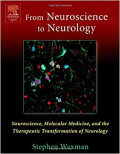
From neuroscience to neurology : neuroscience, molecular medicine, and the th…
The field of neurology is being transformed, from a therapeutically nihilistic discipline with few effective treatments, to a therapeutic specialty which offers new, effective treatments for disord…
- Edition
- -
- ISBN/ISSN
- 0127389032
- Collation
- 1 online resource (x, 513 pages, 24 unnumbered pages of plates) : illustrations (some color)
- Series Title
- -
- Call Number
- 612.8 WAX f
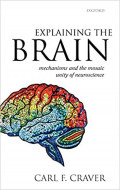
Explaining the brain : mechanisms and the mosaic unity of neuroscience
Craver offers explicit standards for successful explanation of the workings of the brain, on the basis of a systematic view about what neuroscientific explanations are: they are descriptions of mec…
- Edition
- -
- ISBN/ISSN
- 0199299315
- Collation
- 1 online resource (xx, 308 pages) : illustrations
- Series Title
- -
- Call Number
- 612.8 CRA e

Explaining the brain
Craver offers explicit standards for successful explanation of the workings of the brain, on the basis of a systematic view about what neuroscientific explanations are: they are descriptions of mec…
- Edition
- -
- ISBN/ISSN
- 1435624122
- Collation
- 1 online resource (xx, 308 pages) : illustrations
- Series Title
- -
- Call Number
- 612.8 CAR e

Central nervous system diseases and inflammation
Focusing on inflammatory CNS disease, this book explores how chemokines affect disease. It contains four sections which revolve around areas of interest within the field of neuroimmunology, virolog…
- Edition
- -
- ISBN/ISSN
- 9780387738949
- Collation
- 1 online resource (xiii, 313 pages, 8 unnumbered pages of plates)
- Series Title
- -
- Call Number
- 616.079 TEL c

Development and plasticity in sensory thalamus and cortex
Our brain evolved in a manner to enable itself to modify its structure depending on its environment. The thalamus is a large sensory relay station and it is closely integrated into the cortical cir…
- Edition
- -
- ISBN/ISSN
- 9780387386072
- Collation
- 1 online resource (xiv, 322 pages) : illustrations (some color)
- Series Title
- -
- Call Number
- 612.8 REH d

Central nervous system diseases : innovative animal models from lab to clinic
Prominent experimentalists critically review the animal models widely used in developing powerful new therapies for central nervous system diseases.
- Edition
- -
- ISBN/ISSN
- 089603724X
- Collation
- xv, 512 pages : illustrations ; 26 cm.
- Series Title
- Contemporary neuroscience
- Call Number
- 616.8 EME c
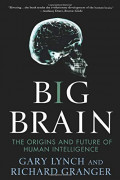
Big brain : the origins and future of human intelligence
"In this groundbreaking book, two eminent scientists, Gary Lynch and Richard Granger, deliver a fascinating and fast-paced investigation of how our brains got the way they are, and how they might g…
- Edition
- -
- ISBN/ISSN
- 1403979790
- Collation
- viii, 259 pages : illustrations ; 25 cm
- Series Title
- -
- Call Number
- 612.82 LYN b

Art therapy and clinical neuroscience
Art Therapy and Clinical Neuroscience offers an authoritative introductory account of the latest developments in neuroscience and its impact on art therapy theory and practice. Contributors explore…
- Edition
- -
- ISBN/ISSN
- 9781843108689
- Collation
- 1 online resource (335 pages) : illustrations
- Series Title
- -
- Call Number
- 616.891 HAS a
American neuroscience in the twentieth century : confluence of the neural, be…
The three component sciences were first developed primarily in northern Europe, says Magoun (1907-91), and spread westward to England, the eastern seaboard of North America, the American Midwest, a…
- Edition
- -
- ISBN/ISSN
- 9789026519383
- Collation
- xviii, 481 pages : illustrations ; 25 cm
- Series Title
- -
- Call Number
- 612.8 MAG a




 Computer Science, Information & General Works
  Philosophy & Psychology
  Religion
  Social Sciences
  Language
  Pure Science
  Applied Sciences
  Art & Recreation
  Literature
  History & Geography